Introduction:
Mercury facts for kids make learning about the solar system’s smallest planet super fun and easy. Mercury is the closest planet to the Sun and moves faster around it than any other planet. This simple guide shares cool Mercury facts for kids in clear, easy English so young explorers can learn about its speedy trips, extreme temperatures, and rocky surface without any confusing words.
Mercury may be tiny, but it is packed with amazing surprises. Let’s explore why this little planet is so special.
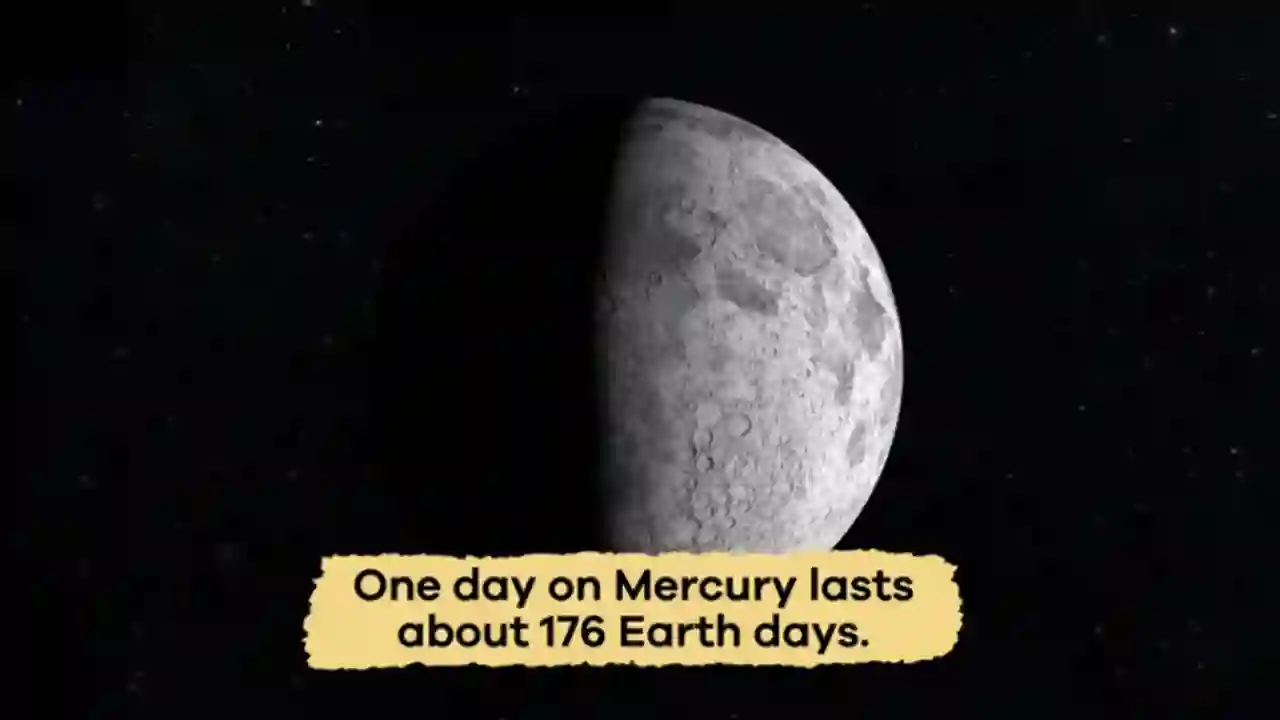
Why Mercury is special for kids
Mercury is the smallest planet in our solar system. It is even smaller than some moons, including Jupiter’s moon Ganymede and Saturn’s moon Titan. Because Mercury is so close to the Sun, it zooms around it very quickly. One full trip around the Sun takes only 88 Earth days.
From Earth, Mercury is hard to see. It looks like a small gray dot and usually hides in the bright glow of the Sun. Kids enjoy Mercury facts for kids because Mercury feels like a speedy race-car planet that never slows down.
Even though Mercury is small, it has huge surprises. It has no thick air to breathe, no oceans, and no weather like rain or snow. Its surface is covered with craters, just like the Moon. Scientists believe Mercury formed billions of years ago from rocky pieces left over after the Sun and planets were created.
Mercury temperature extremes
One of the most exciting Mercury facts for kids is how extreme its temperatures are.
Mercury temperature extremes are some of the wildest in the solar system. During the daytime, when the Sun shines directly on Mercury, temperatures can rise above 430 degrees Celsius. That is hot enough to melt metals like tin or lead.
At night, Mercury becomes freezing cold. Temperatures can drop to around -180 degrees Celsius. This happens because Mercury has almost no atmosphere. Without air to trap heat, warmth escapes into space as soon as the Sun sets.
Imagine standing somewhere that feels like an oven during the day and a freezer at night. That is what Mercury is like every single day.
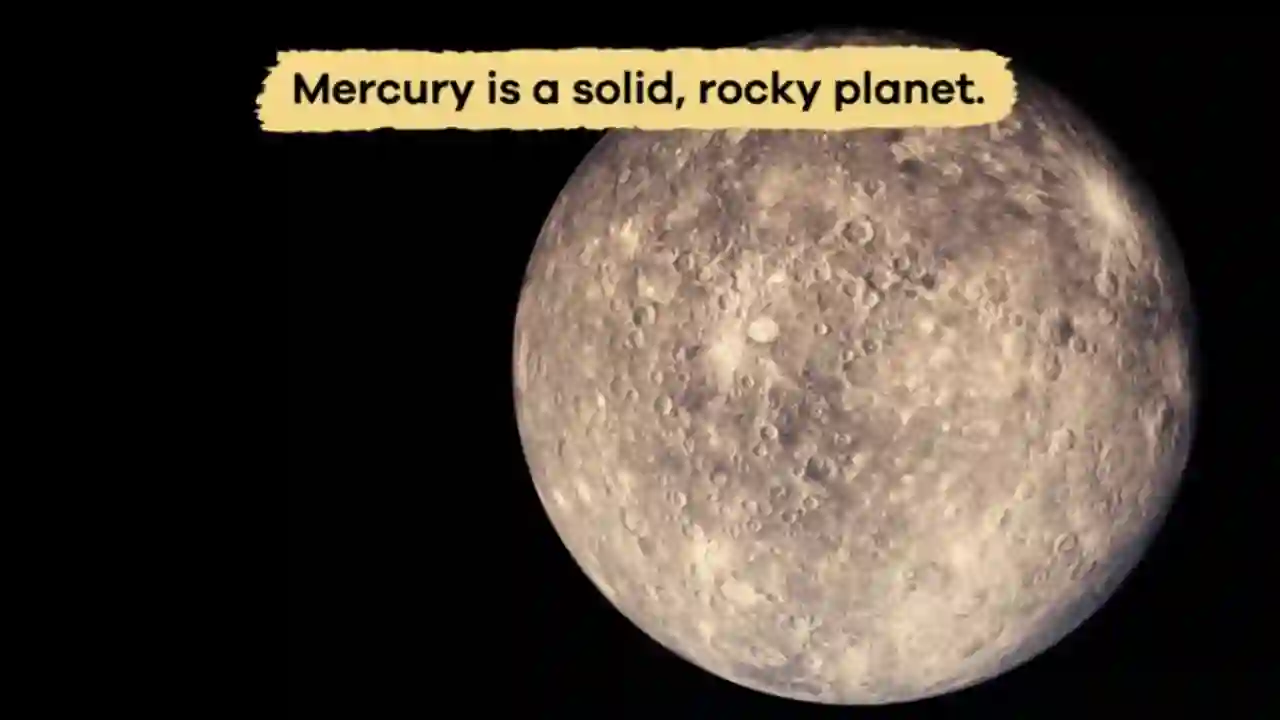
Mercury orbital period explained
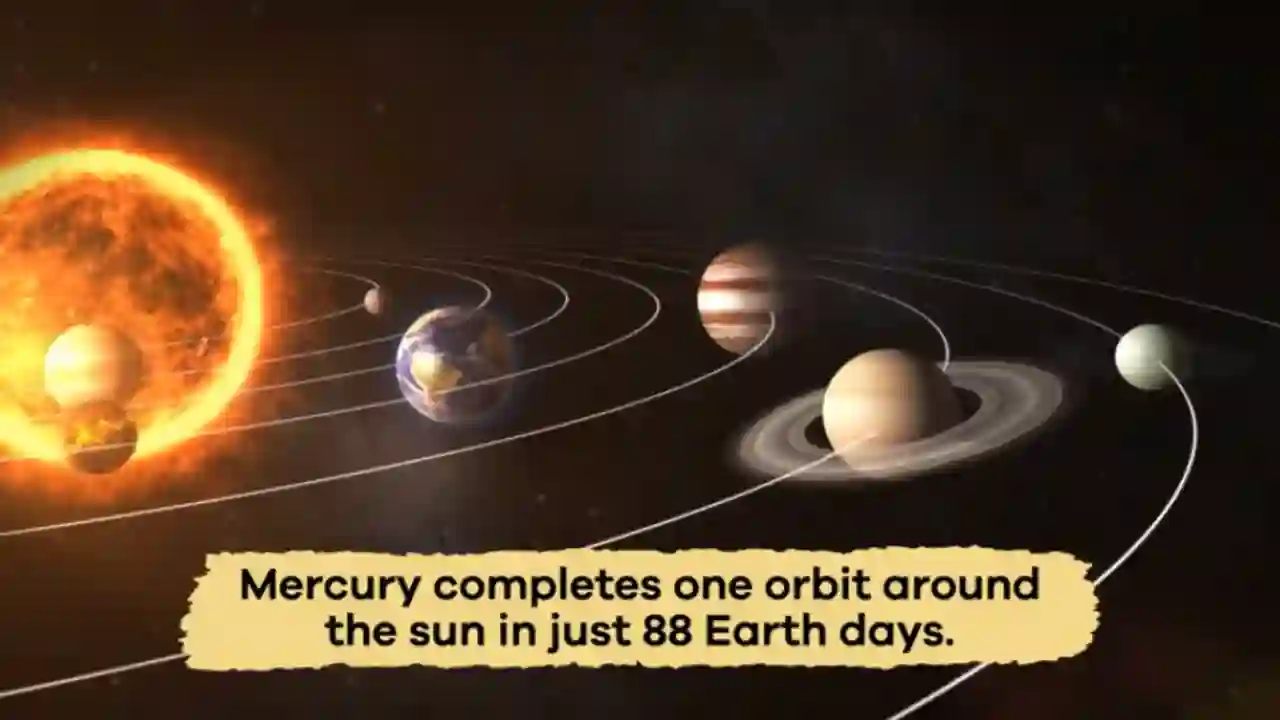
The Mercury orbital period is very short compared to other planets.
Mercury orbital period days equal just 88 Earth days. This means a year on Mercury is less than three months long on Earth. Mercury moves faster around the Sun than any other planet.
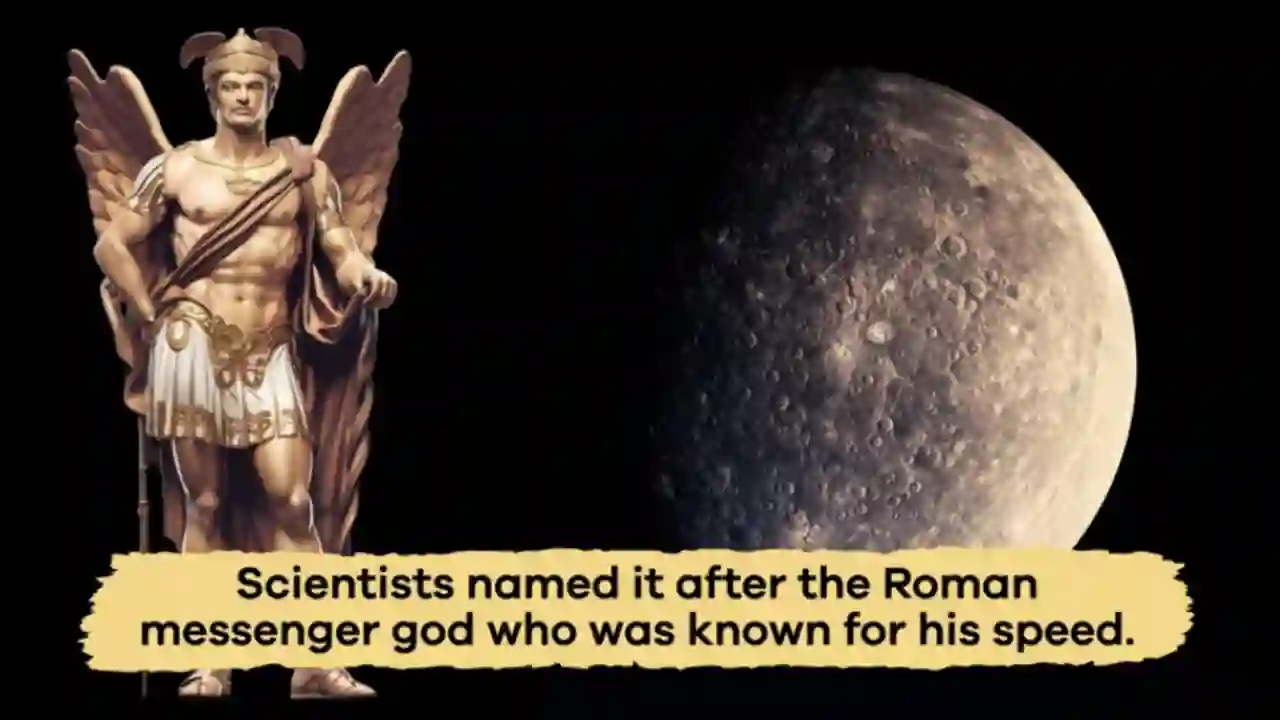
Mercury was named after the Roman messenger god, who was known for his speed. From Mercury’s surface, the Sun would look about three times larger than it does from Earth because Mercury is so close to it.
This fast orbit makes Mercury facts for kids exciting and easy to remember.
MESSENGER mission findings
The MESSENGER mission helped scientists learn more about Mercury than ever before. NASA launched MESSENGER in 2004, and it orbited Mercury from 2011 to 2015.
MESSENGER took thousands of pictures and studied Mercury’s surface and interior. One of the biggest surprises was the discovery of frozen water ice in craters near Mercury’s poles. These craters never get sunlight, so the ice stays frozen even though the planet is very hot.
MESSENGER also found strange shallow pits called hollows, which may have formed when minerals suddenly escaped from the surface. Scientists also learned that Mercury has a magnetic field, which was unexpected for such a small planet.
Thanks to the MESSENGER mission findings, Mercury is no longer just a tiny gray planet but a world full of mysteries.
Mercury vs Moon comparison
Looking at Mercury vs Moon helps kids understand Mercury better.
Both Mercury and the Moon have gray, rocky surfaces filled with craters. These craters formed when space rocks crashed into them long ago. Both worlds also lack thick air and liquid water on the surface.
However, Mercury is bigger than the Moon. Mercury is about one and a half times wider. Mercury also orbits the Sun, while the Moon orbits Earth. Another difference is that Mercury has a weak magnetic field, but the Moon does not.
Comparing Mercury vs Moon shows how similar rocky worlds can still have important differences.
How inner planet formation happened
Inner planet formation began billions of years ago near the young Sun. Mercury, Venus, Earth, and Mars formed from hot dust and rocky pieces swirling around the Sun.
Because Mercury formed so close to the Sun, strong solar winds blew away many lighter materials. This left Mercury with a very large metal core and a thin rocky outer layer.
This process explains why Mercury is small but very dense. Inner planet formation also explains why planets closer to the Sun are rocky instead of made of gas like Jupiter or Saturn.
Mercury’s surface and what lives there
Mercury’s surface looks rough and broken. It has tall cliffs, wide plains, and deep craters. Some cliffs formed as Mercury slowly shrank while cooling over billions of years.
There is no life on Mercury. The planet is too hot, too cold, and has no air or liquid water. Strong radiation from the Sun also makes life impossible on the surface.
However, the frozen water at the poles makes scientists curious. While no life exists today, studying Mercury helps scientists understand how planets change over time.
Watching Mercury from Earth
Watching Mercury from Earth can be tricky but fun.
Mercury stays close to the Sun in the sky, so it can only be seen just after sunset or just before sunrise. It appears low on the horizon and is easiest to spot during certain times of the year.
With a telescope, Mercury shows phases like the Moon. Kids can use space apps, books, or planetarium shows to track Mercury’s movement and learn more Mercury facts for kids at home.
Why study Mercury at all
Some kids ask why scientists study such a small and harsh planet.
Mercury teaches us how planets survive close to stars. Learning about Mercury helps scientists understand Earth’s past and how planets form in other solar systems.
Missions like MESSENGER also help scientists design better spacecraft that can handle extreme heat. Mercury facts for kids inspire curiosity and big questions about space exploration and discovery.
Conclusion
Mercury facts for kids tell the story of a tiny, speedy planet with huge temperature changes and a rocky past. From its 88-day year to its freezing nights and burning days, Mercury is a planet of extremes. Thanks to the MESSENGER mission, we now know Mercury has ice, a magnetic field, and a fascinating surface.
Even though Mercury is small, it teaches us big lessons about how the solar system formed and how planets survive in tough places. For curious kids, Mercury is a fast, fiery world full of science and wonder.
Credit: Video and images sourced from the YouTube video referenced above. All rights belong to the original creator. Learn Bright
10 FAQs on Mercury facts for kids
What is Mercury?
Mercury is the smallest planet and the closest one to the Sun.
Why does Mercury have extreme temperatures?
Mercury has almost no atmosphere, so it gets very hot in the day and very cold at night.
How long is Mercury’s orbital period?
Mercury orbital period is 88 Earth days.
What did the MESSENGER mission discover?
MESSENGER found frozen water, a magnetic field, and strange surface features.
How is Mercury like the Moon?
Both have cratered, rocky surfaces and very little atmosphere.
How did Mercury form?
Inner planet formation created Mercury from rocky material near the Sun.
Can you see Mercury from Earth?
Yes, but only near sunrise or sunset, low on the horizon.
Does Mercury have water?
Yes, frozen water exists in dark craters at the poles.
Is Mercury always hot?
No, it is extremely hot during the day and extremely cold at night.
Why is Mercury important to study?
Mercury helps scientists understand planet formation and extreme environments in space.
Suggested Posts
Planet Venus | Facts for Kids Explained
Jupiter Facts for Kids – Biggest Planet in the Solar System
Solar System Adventure | Free Online Game Quiz
Neptune Facts for Kids: Explore the Farthest Planet and Its Moons