Introduction:
Jupiter Facts for Kids
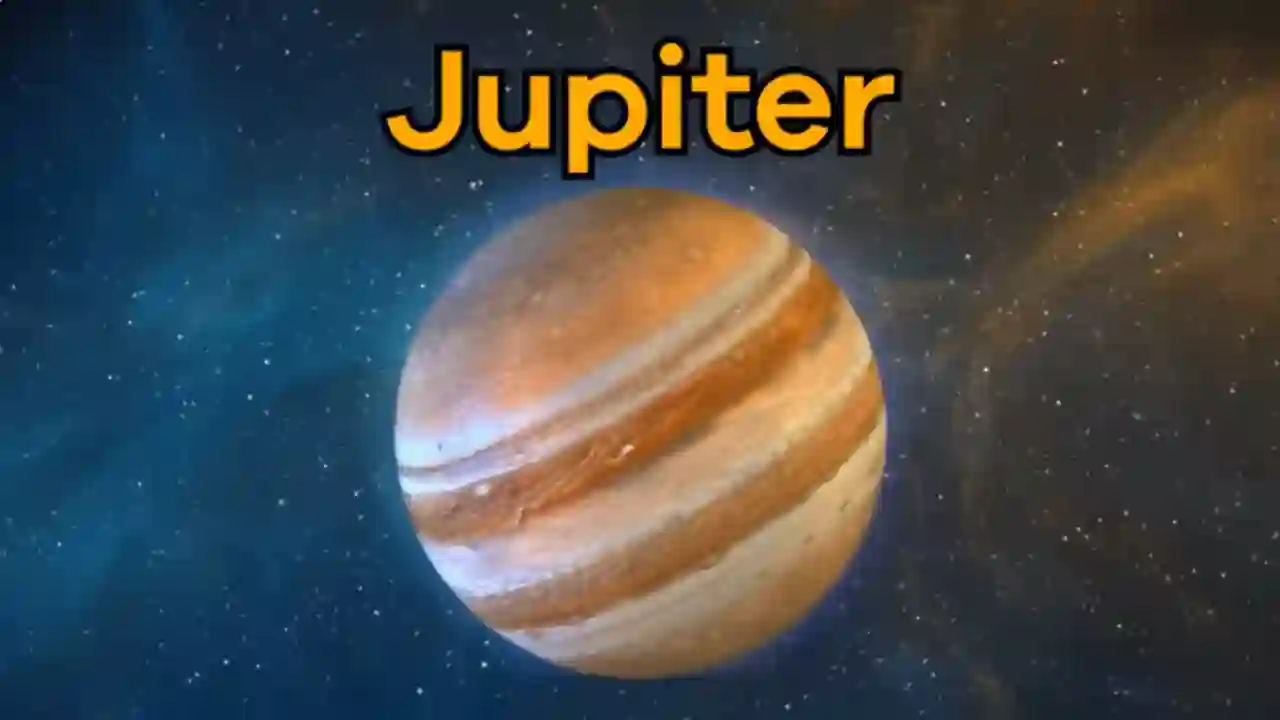
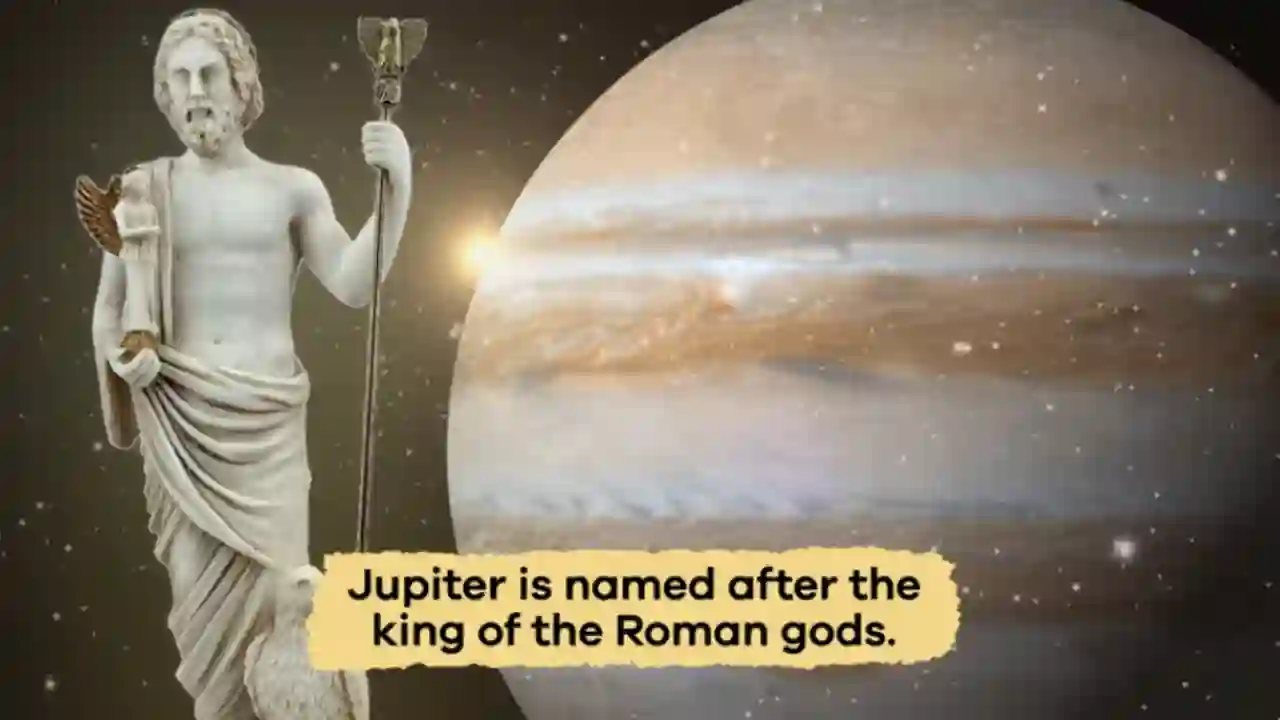
Jupiter facts for kids reveal the biggest and most amazing planet in our solar system. This giant world is named after Jupiter, the king of the Roman gods, and it truly lives up to that powerful name. Jupiter looks like a colorful, swirling ball full of clouds, storms, and secrets that kids love to explore. In this simple guide, we will share easy planet Jupiter facts so learning about space feels fun and exciting, just like playing a game on your quiz site.
Jupiter is very different from Earth, but it helps scientists understand how the solar system works and how giant planets are formed.
Why Jupiter stands out as the largest planet
Jupiter is the largest planet in the entire solar system. It is so huge that more than 1,000 Earths could fit inside it. If Earth were the size of a marble, Jupiter would be as big as a beach ball. This makes Jupiter easy to remember in Jupiter facts for kids as the giant of all planets.
Jupiter is not made of solid rock like Earth. It is mostly made of gases called hydrogen and helium, the same gases found in the Sun. Because of this, scientists sometimes describe Jupiter as a “failed star.” It does not shine like the Sun because it is not big enough to start nuclear reactions.
There is no solid ground on Jupiter. If someone tried to land there, they would sink deeper and deeper into thick clouds until the pressure became too strong. Jupiter’s massive size also gives it very strong gravity. This gravity pulls in comets and asteroids, helping protect smaller planets like Earth. Kids can imagine Jupiter as the big protector of the solar system.
Jupiter moons overview for young explorers
A fun part of Jupiter facts for kids is learning about its many moons. Jupiter has more than 90 known moons, making it the planet with the largest moon family.
The most famous ones are called the Galilean moons. These are Io, Europa, Ganymede, and Callisto. They were discovered long ago by Galileo Galilei using a telescope.
- Io is covered with active volcanoes and is the most volcanic world in the solar system.
- Europa is covered in ice and may hide a huge ocean of liquid water underneath.
- Ganymede is the largest moon in the solar system and is even bigger than the planet Mercury.
- Callisto is covered with craters and looks very old and rocky.
Besides these big moons, Jupiter has many small moons that look like captured space rocks. Thinking about Jupiter’s moons is like imagining a whole mini solar system spinning around one giant planet.
Great Red Spot explained simply
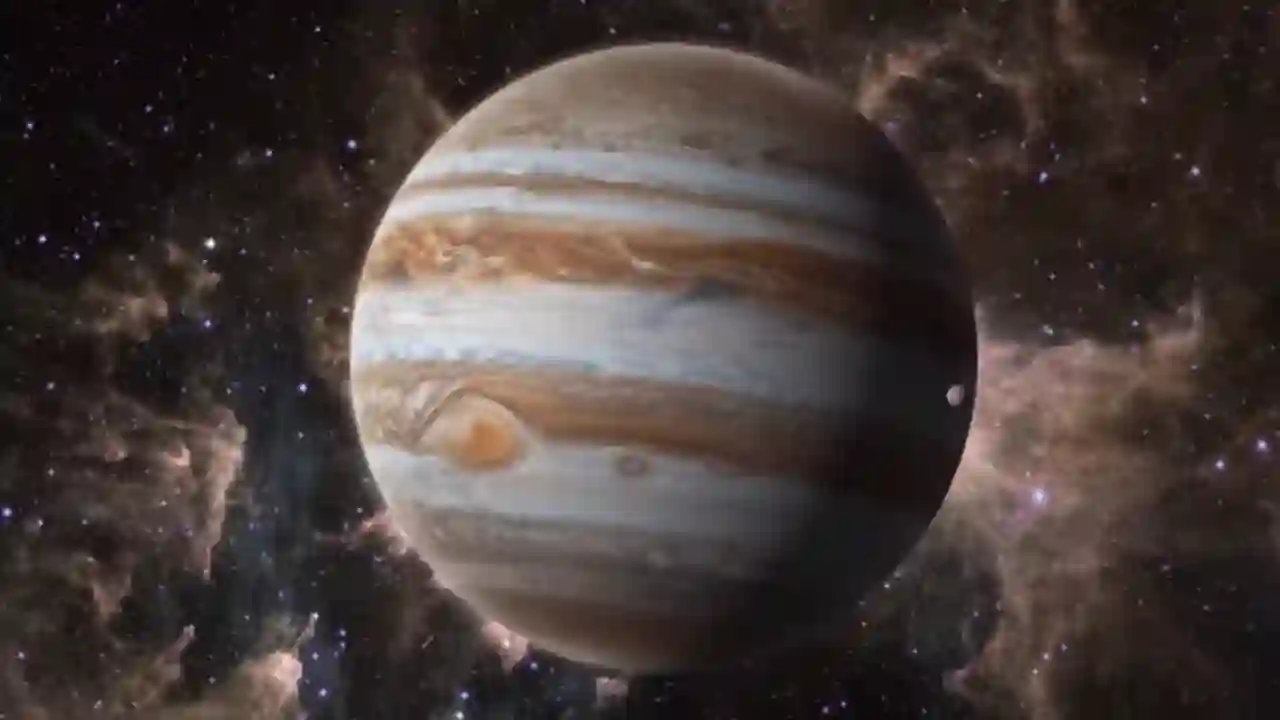
One of the most famous planet Jupiter facts is the Great Red Spot.
The Great Red Spot is a gigantic storm on Jupiter. It is bigger than Earth and has been spinning for more than 300 years. This storm looks like a giant red oval on Jupiter’s surface and is made of powerful swirling clouds.
Winds inside the Great Red Spot can reach speeds of over 400 miles per hour. That is much faster than the strongest hurricanes on Earth. Scientists are not completely sure why the spot is red, but it may be caused by chemicals in the clouds reacting with sunlight.
The Great Red Spot sometimes shrinks or changes shape, but it has never fully disappeared. This makes it one of the coolest and longest-lasting storms we know about.
Jupiter’s magnetic field and its power
Jupiter’s magnetic field is the strongest of any planet in the solar system. It is so powerful that it stretches millions of miles into space.
Deep inside Jupiter, fast-spinning liquid hydrogen creates this giant magnetic field. This field traps charged particles and creates bright glowing lights near Jupiter’s poles called auroras. These auroras are much stronger and brighter than Earth’s northern and southern lights.
Jupiter’s magnetic field acts like an invisible shield, but it also traps dangerous radiation. This makes exploring Jupiter and its moons very challenging for spacecraft. Still, it is one of the most interesting Jupiter facts for kids to imagine an invisible force surrounding a planet.
What makes gas giant planets like Jupiter
Jupiter belongs to a group of planets called gas giant planets. These include Jupiter, Saturn, Uranus, and Neptune.
Gas giants are very large and are mostly made of gases instead of solid rock. Jupiter is the biggest gas giant of them all. It has layers of thick clouds, liquid hydrogen, and possibly a rocky core deep inside.
These planets formed far from the Sun, where it was cold enough for gases to collect. Jupiter spins very fast, taking only about 10 hours to complete one day. This fast spin makes Jupiter bulge at the middle, giving it a slightly squashed shape.
Understanding gas giant planets helps kids see how different planets can be in size, shape, and makeup.
Jupiter facts from NASA missions
Many exciting NASA Jupiter facts come from space missions sent to study this giant planet.
Early missions like Pioneer and Voyager gave scientists their first close-up images of Jupiter and its moons. The Galileo spacecraft later orbited Jupiter and studied it in detail.
Today, the Juno spacecraft is exploring Jupiter. Juno flies very close to the planet, diving under its clouds to measure water, storms, and the Great Red Spot. Some probes were even sent into Jupiter’s atmosphere, sending information back until they were crushed by pressure.
These missions have taught scientists about Jupiter’s storms, rings, gravity, and magnetic field.
Everyday wonders of planet Jupiter facts
Jupiter is one of the easiest planets to see from Earth. With binoculars, kids can spot Jupiter and even see its four largest moons as tiny dots nearby.
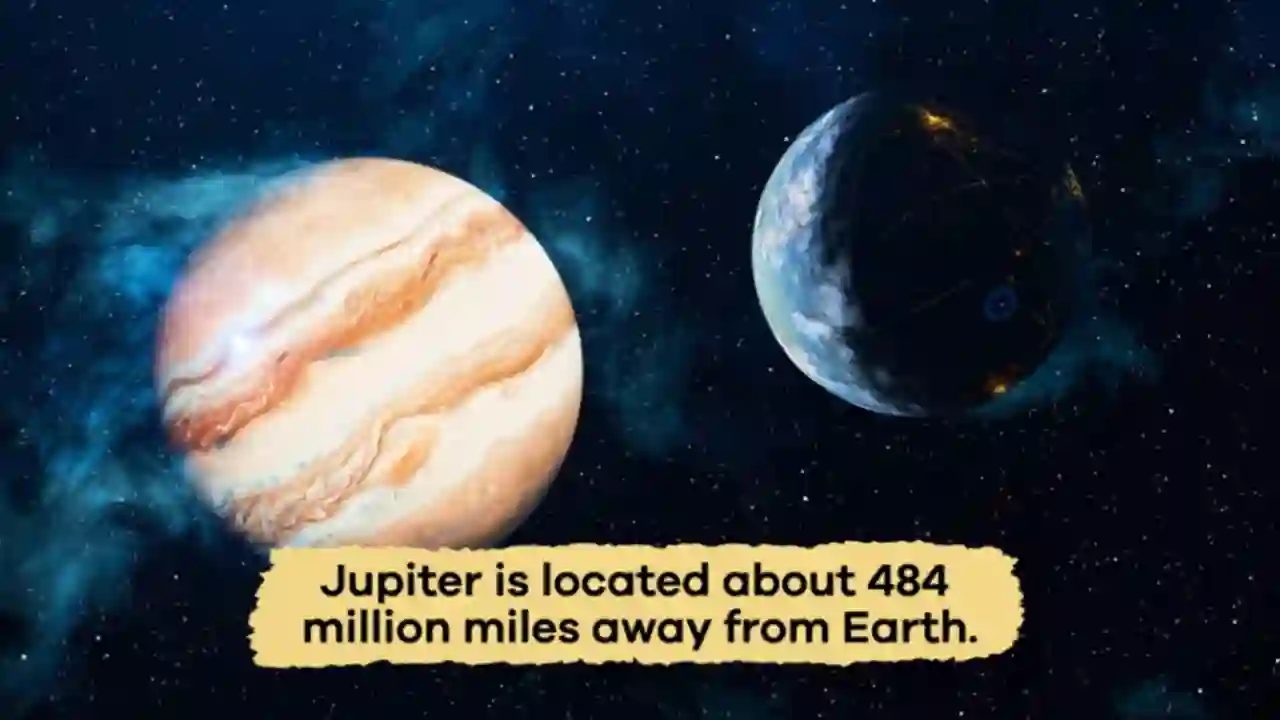
A year on Jupiter lasts about 12 Earth years. That means if you lived on Jupiter, you would celebrate birthdays much less often. Sunlight takes about 43 minutes to reach Jupiter, compared to just 8 minutes to reach Earth.
Jupiter’s clouds form colorful bands called belts and zones. These bands move in opposite directions, creating wild weather patterns that never stop.
Fun ways to remember Jupiter facts
A fun way to remember Jupiter facts for kids is to picture Jupiter as a giant striped ball with a red eye in the middle. Imagine dozens of moons spinning around it like a playground in space.
Jupiter’s short day means everything moves fast, while its long year means seasons last a very long time. These fun ideas make Jupiter easy to remember and exciting to learn about.
Conclusion
Jupiter facts for kids paint a picture of the solar system’s mighty king. From its enormous size and powerful gravity to its Great Red Spot and giant family of moons, Jupiter is full of wonders. NASA missions continue to uncover new planet Jupiter facts, helping scientists understand gas giants and space weather.
For kids, Jupiter is a planet that sparks imagination, curiosity, and big dreams about space exploration.
Credit: Video and images sourced from the YouTube video referenced above. All rights belong to the original creator. Learn Bright
10 FAQs on Jupiter facts for kids
How big is Jupiter?
Jupiter is the largest planet and could fit over 1,000 Earths inside it.
What is the Great Red Spot?
It is a giant storm on Jupiter that has lasted for hundreds of years.
How many moons does Jupiter have?
Jupiter has over 90 moons, including four large Galilean moons.
What is Jupiter made of?
Jupiter is mostly made of hydrogen and helium gases.
How long is a day on Jupiter?
One day on Jupiter is about 10 hours long.
Does Jupiter have rings?
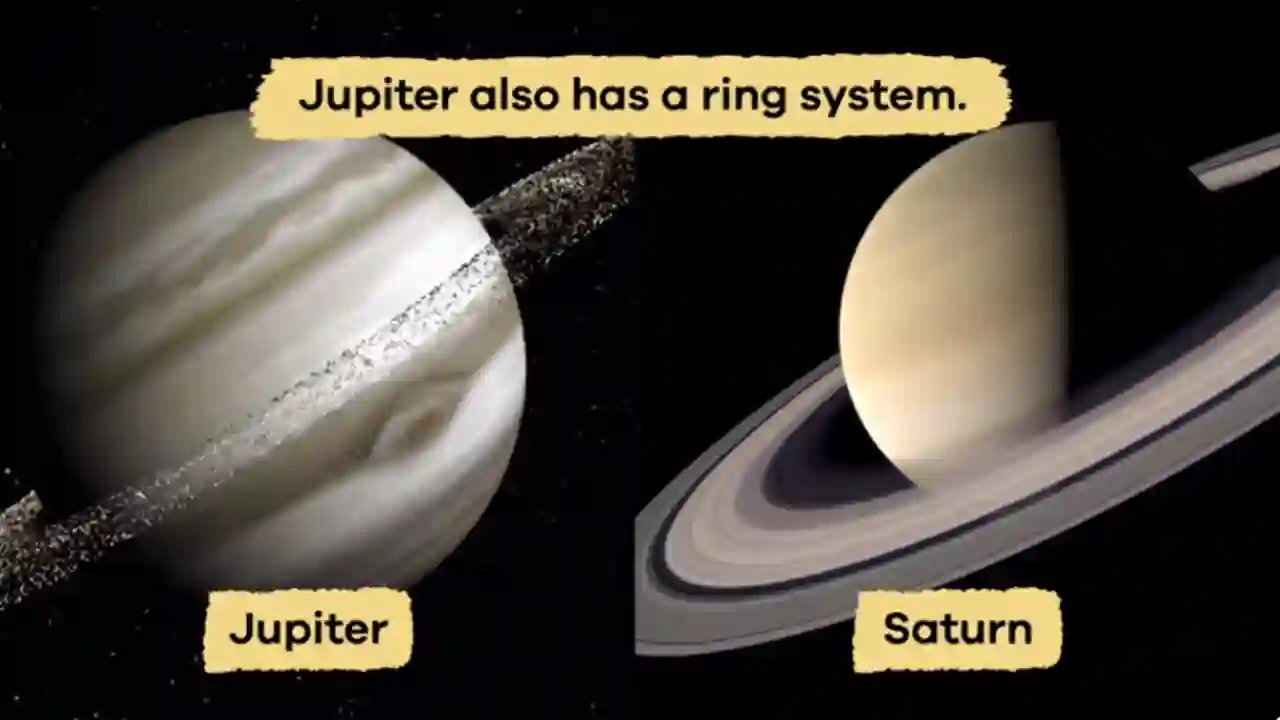
Yes, Jupiter has faint rings made of dust.
Why is Jupiter called a gas giant?
Because it is huge and made mostly of gas, with no solid surface.
What does Jupiter’s magnetic field do?
It traps radiation and creates bright auroras near the poles.
How far is Jupiter from the Sun?
Jupiter is about five times farther from the Sun than Earth.
What did NASA learn from Jupiter missions?
NASA learned about Jupiter’s storms, moons, magnetic field, and deep atmosphere.
Suggested Posts
Saturn Facts | Learn About Moons, Rings & Planet Wonders
Uranus Facts for Kids | Ice Giant, Rings, Moons & Weird Tilts
Neptune Facts for Kids: Explore the Farthest Planet and Its Moons
Earth Planet Facts for Kids | Explore Our Blue and Green Home