Introduction
Mars facts for kids are a fun and exciting way to learn about one of the most interesting planets in our solar system. Mars is often called the Red Planet, and it has amazed scientists, kids, and space lovers for hundreds of years. In this easy guide, we will explore Mars mysteries in very simple English so even an 8-year-old kid can read, enjoy, and understand. We will talk about Mars planet size, why Mars is red in color, Mars attacks (what people really mean by that), NASA life on Mars research, Mars exploration missions, Mars weather and seasons, Mars moons Phobos Deimos, and even big ideas like terraforming Mars.
This article is written especially for kids and for the Solar System Adventure quiz site, so everything is explained gently, clearly, and in a friendly way.
Introduction to Mars facts for kids
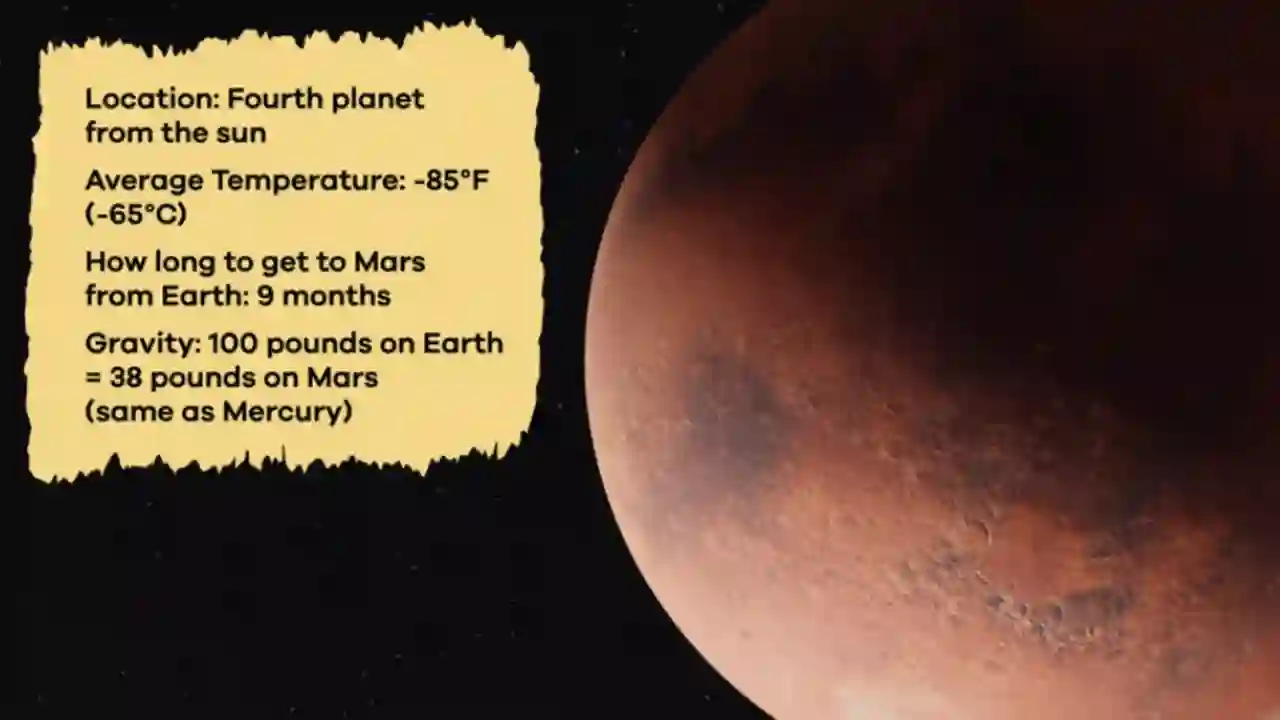
Mars facts for kids begin with one simple idea: Mars is the fourth planet from the Sun and one of Earth’s closest neighbors in space. Because Mars is close to Earth and looks bright red in the night sky, people have always been curious about it. Long ago, some people even thought Mars might have aliens or strange creatures. Today, scientists know much more, but Mars is still full of mysteries.
Mars is a rocky planet like Earth, Mercury, Venus, and Earth itself. It is not made of gas like Jupiter or Saturn. Mars has land, mountains, valleys, dust, ice, and even signs that water once flowed across its surface. All of this makes Mars a perfect planet to study, especially for kids who love space and science.
Why is Mars red and why is Mars red in color?
One of the most common Mars facts for kids is about its color.
- Why is Mars red?
- Why is Mars red in color?
Mars looks red because its surface is covered with dusty soil that contains iron. This iron reacts with oxygen, just like metal rusts on Earth. When iron rusts, it turns reddish-brown. Scientists call this iron oxide, but kids can just think of it as “rusty dust.”
This rusty dust covers rocks, hills, and plains all over Mars. When sunlight hits the surface, the dust reflects red and orange colors back into space. That is why Mars looks red when we see it from Earth, even with small telescopes.
The red color is not paint or fire. It is simply rusty soil spread across the planet by wind and dust storms. This is one of the coolest and easiest Mars facts for kids to remember.
Mars planet size explained for kids
Another important topic is Mars planet size. Mars is smaller than Earth, but it is still a big planet.
Mars has a diameter of about 6,779 kilometers (4,212 miles). Earth’s diameter is about 12,742 kilometers. This means Mars is about half the size of Earth.
Because Mars is smaller, it also has weaker gravity. Gravity on Mars is about 38% of Earth’s gravity. For kids, this means if you jumped on Mars, you could jump much higher than on Earth. If a kid weighs 30 kilograms on Earth, they would weigh only about 11 kilograms on Mars.
Mars is big enough to have huge mountains and deep valleys. Olympus Mons, the tallest volcano in the entire solar system, is on Mars. It is about three times taller than Mount Everest. Mars also has Valles Marineris, a canyon system so large it would stretch across entire countries on Earth.
How long is a day on Mars?
Kids often ask about time on other planets, and this is a fun Mars fact for kids.
- How long is a day on Mars?
- A day on Mars is called a “sol.”
How long is a day on Mars in hours?
A Martian day is about 24 hours and 39 minutes long.
How long is a day on Mars in Earth days?
That means one day on Mars is about 1.03 Earth days.
Mars spins on its axis at a speed similar to Earth, which is why the day length is almost the same. This makes Mars easier for scientists to study because day and night cycles feel familiar.
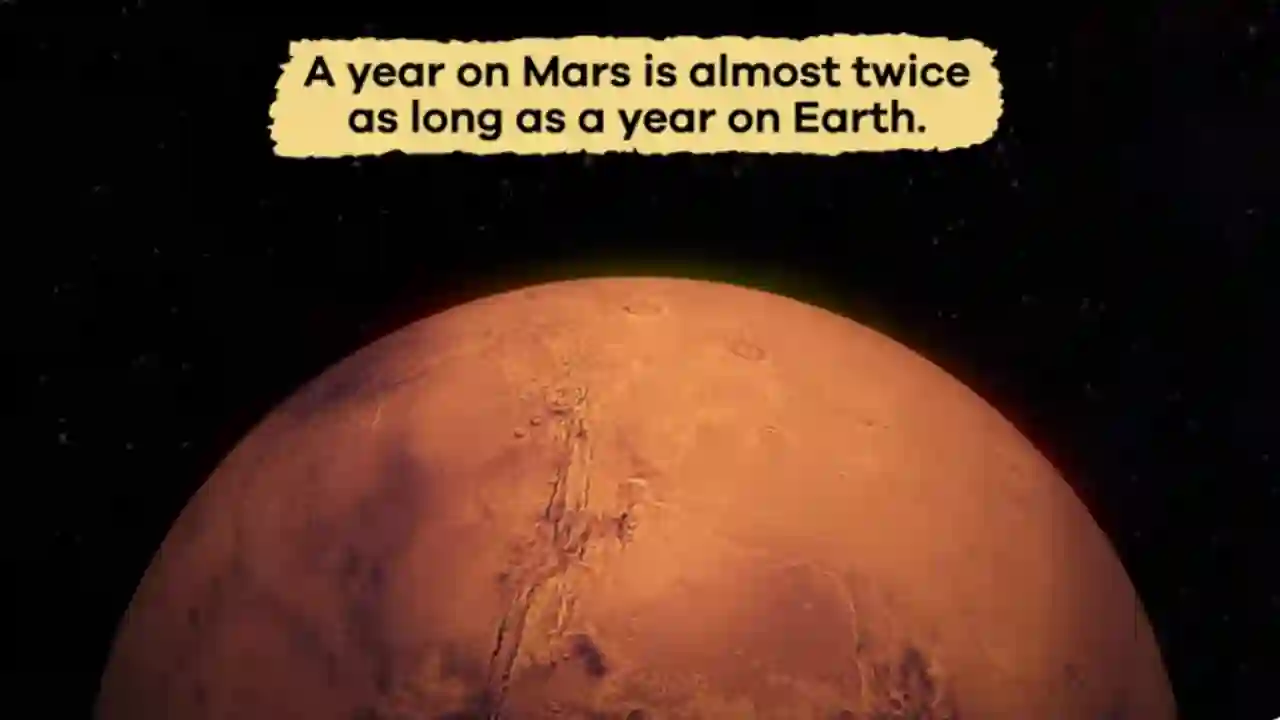
Even though the day is similar, a year on Mars is very different. One year on Mars lasts 687 Earth days. That is almost twice as long as an Earth year.
Mars weather and seasons
Mars weather and seasons are another exciting topic for kids.
Mars has seasons just like Earth. This is because Mars tilts on its axis as it travels around the Sun. However, because Mars takes longer to go around the Sun, each season lasts much longer than seasons on Earth.
Mars can be very cold. Average temperatures on Mars are much lower than on Earth. Near the equator, daytime temperatures can sometimes feel cool but not freezing. At night, temperatures drop very fast and become extremely cold.
Mars also has dust storms. Some dust storms are small and local, while others can grow so big that they cover the entire planet. These storms can last for weeks or even months. The thin atmosphere makes the sky look pink, orange, or light brown instead of blue like Earth’s sky.
Mars weather teaches kids how planets can be very different yet still follow some similar rules.
Does Mars have water?
A big and exciting question is: Does Mars have water?
The answer is yes, Mars does have water, but not in the same way Earth does.
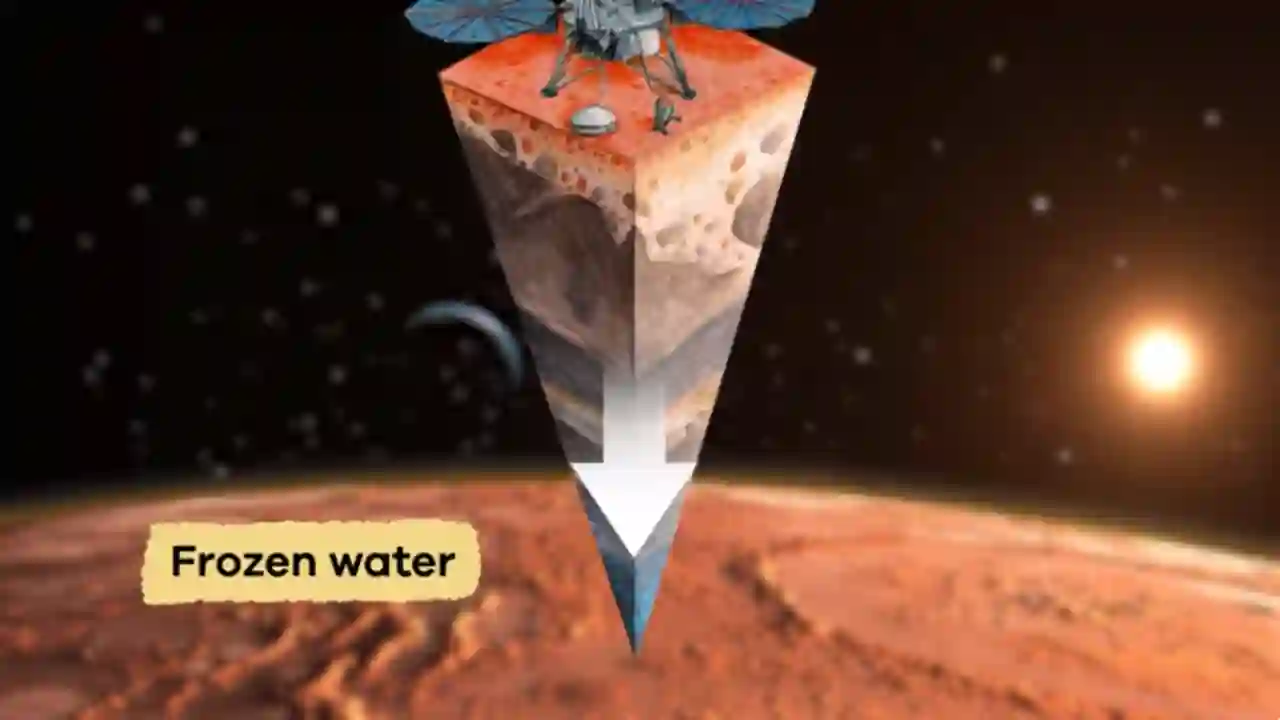
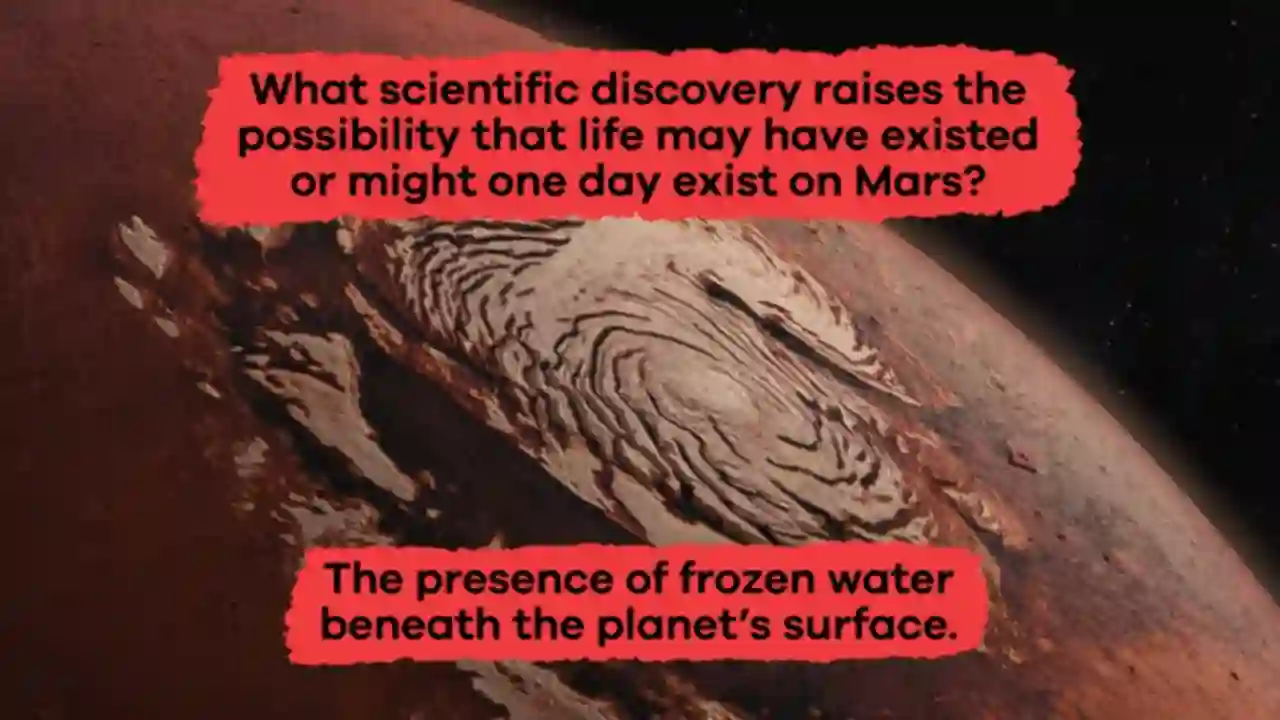
Today, most water on Mars exists as ice. There is frozen water at the north and south poles, just like ice caps on Earth. Scientists have also found water ice under the surface in many places.
Long ago, Mars had rivers, lakes, and maybe even oceans. Scientists know this because they have seen dry riverbeds, smooth stones shaped by water, and minerals that form only when water is present.
Some scientists think tiny amounts of liquid water might still exist deep underground, protected from the cold and thin air. Finding water is very important because water is needed for life as we know it.
NASA life on Mars research
NASA life on Mars is one of the biggest reasons scientists explore this planet.
So far, no one has found living creatures on Mars. There is no confirmed life on Mars today. However, NASA missions are searching for signs that life might have existed long ago.
NASA sends robots to Mars to study rocks, soil, air, and weather. These robots look for clues like organic molecules and patterns that suggest Mars was once a friendly place for tiny living things.
The idea of life on Mars is exciting for kids, but scientists are careful. They study slowly and carefully, using facts and evidence.
Mars exploration missions made simple
Mars exploration missions are space journeys sent to Mars to learn more about the planet.
Many missions have visited Mars over the years. Some fly around Mars, some land on the surface, and some drive across it.
Rovers like Curiosity and Perseverance act like robot explorers. They take photos, drill rocks, test soil, and send information back to Earth. These robots help scientists learn about Mars without sending humans yet.
Orbiters fly above Mars and take pictures from space. They study clouds, dust storms, ice, and the planet’s shape.
Future Mars exploration missions may bring rock samples back to Earth or even prepare for human visits one day.
Mars attacks: what does it really mean?
Some kids and adults search for Mars attacks, but this does not mean real attacks.
Mars does not attack Earth, and there are no Martians invading our planet. The phrase “Mars attacks” usually comes from movies, games, or misunderstandings.
In real science, Mars is not dangerous to Earth. Scientists send missions to Mars peacefully to learn and explore. Mars is a planet of curiosity, not conflict.
Understanding this helps kids separate science facts from science fiction.
Mars moons Phobos Deimos
Mars moons Phobos Deimos are another fun Mars fact for kids.
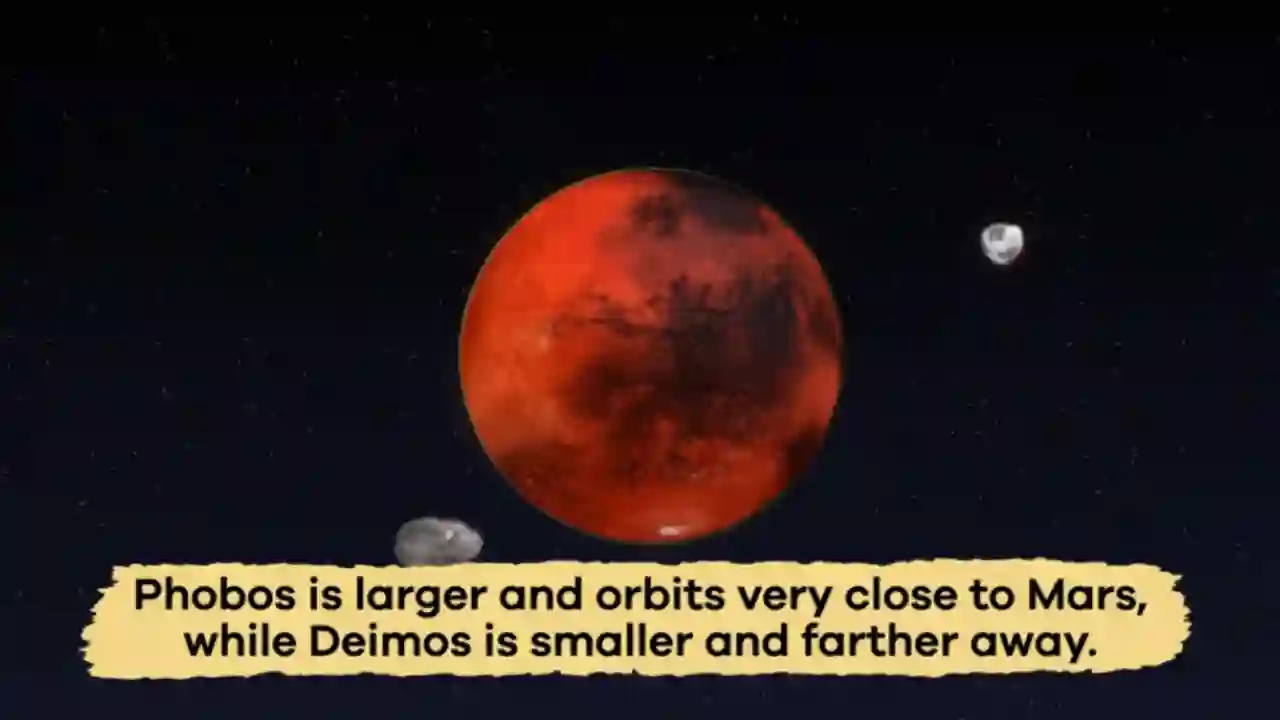
Mars has two small moons named Phobos and Deimos. They are much smaller than Earth’s Moon and have strange, uneven shapes, like potatoes.
Phobos is the larger moon and orbits Mars very quickly. It rises in the west and sets in the east, which is the opposite of Earth’s Moon. Deimos is smaller and orbits farther away.
Scientists think Phobos and Deimos might be captured asteroids or pieces left over from Mars’s early history. Studying these moons helps scientists learn how planets and moons form.
Terraforming Mars explained simply
Terraforming Mars is a big idea that sounds like science fiction, but scientists talk about it seriously too.
Terraforming means changing a planet to make it more like Earth. For Mars, this would mean warming it up, making the atmosphere thicker, and creating liquid water on the surface.
Right now, terraforming Mars is not possible with today’s technology. It would take hundreds or thousands of years and many advanced tools.
Terraforming Mars expansions are ideas seen in books, games, and movies. They imagine green plants, cities under domes, and humans living on Mars. These ideas are fun to think about, but real Mars missions focus on learning and exploration, not changing the planet yet.
Why Mars is important for kids to learn about
Learning Mars facts for kids helps children understand science, space, and curiosity.
Mars teaches us about planets, weather, time, and exploration. It shows how scientists ask questions, test ideas, and learn from mistakes.
Studying Mars also helps us understand Earth better. By comparing Mars and Earth, kids learn why Earth is special and how planets can change over time.
Mars inspires imagination and dreams. Many scientists today were kids who once looked at Mars and wondered what it was like.
Conclusion
Mars facts for kids open the door to an amazing world full of red dust, giant volcanoes, frozen water, and exciting missions. Mars is smaller than Earth, has a day almost the same length, and seasons that last much longer. Its red color comes from rusty dust, its moons Phobos and Deimos are tiny and strange, and its weather can be cold and stormy.
Scientists and NASA life on Mars research continue to explore whether Mars once had water and maybe even life. Mars exploration missions help us learn more every year, while big ideas like terraforming Mars spark imagination for the future.
For kids, Mars is not just a planet. It is a story of discovery, learning, and adventure that continues to grow.
Credit: Video and images sourced from the YouTube video referenced above. All rights belong to the original creator. Learn Bright
10 Kid-Friendly FAQs about Mars
-
What makes Mars look red?
Mars looks red because its soil has rusty dust called iron oxide.
-
How big is Mars compared to Earth?
Mars is about half the size of Earth.
-
How long is a day on Mars?
A day on Mars is about 24 hours and 39 minutes.
-
Does Mars have water?
Yes, Mars has water mostly as ice at the poles and underground.
-
How many moons does Mars have?
Mars has two moons called Phobos and Deimos.
-
Have humans visited Mars?
No humans yet, but robots and rovers have explored Mars.
-
What is NASA searching for on Mars?
NASA is searching for signs of past water and possible life.
-
What are Mars exploration missions?
They are space missions that study Mars using orbiters, landers, and rovers.
-
What does terraforming Mars mean?
It means changing Mars to be more like Earth, but it is only an idea for the future.
-
Why should kids learn about Mars?
Learning about Mars helps kids understand science, space, and curiosity in a fun way.
Suggested Posts
Jupiter Facts for Kids – Biggest Planet in the Solar System
Saturn Facts | Learn About Moons, Rings & Planet Wonders
Solar System Adventure | Free Online Game Quiz
Neptune Facts for Kids: Explore the Farthest Planet and Its Moons