Introduction
Saturn facts for kids are full of wonders, rings, and moons that make this giant planet one of the most exciting in our solar system. Saturn, the sixth planet from the Sun, is famous for its beautiful rings and dozens of moons, each with its own mysteries. This simple guide shares Saturn facts for kids in easy language so young explorers can learn and imagine adventures in space.
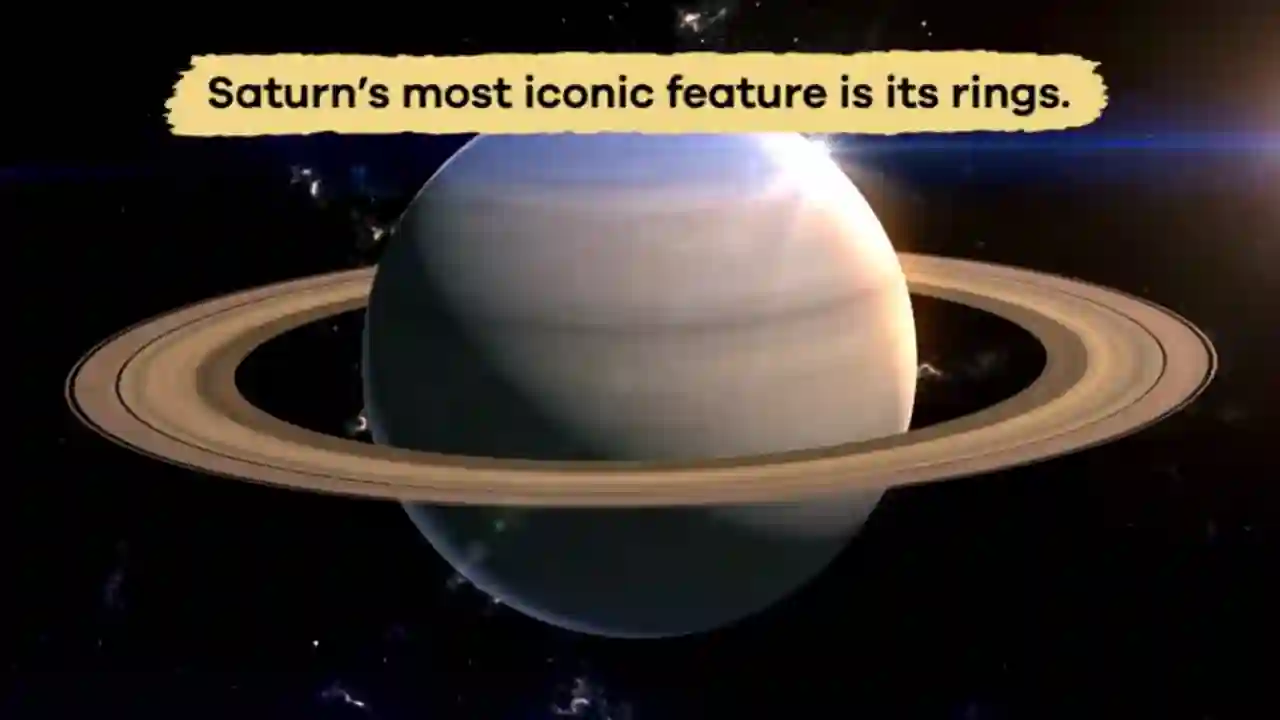
Saturn Planet Basics for Curious Kids
Saturn is a gas giant, meaning it’s mostly made of hydrogen and helium gases, with no solid ground to stand on. Its pale yellow color comes from clouds of ammonia crystals mixed with other gases, giving it a soft, golden glow. Kids can spot Saturn in the night sky with a telescope or binoculars—it shines brightly like a glowing golden ball.
Named after the Roman god of time and agriculture, Saturn planet meaning ties to the slow passage of seasons, which fits because one Saturn year lasts about 29 Earth years. Inside Saturn, pressure turns gases into liquids and even metallic forms deep down, surrounding a rocky core about the size of Earth. Imagine diving into endless clouds that never let you touch the ground.
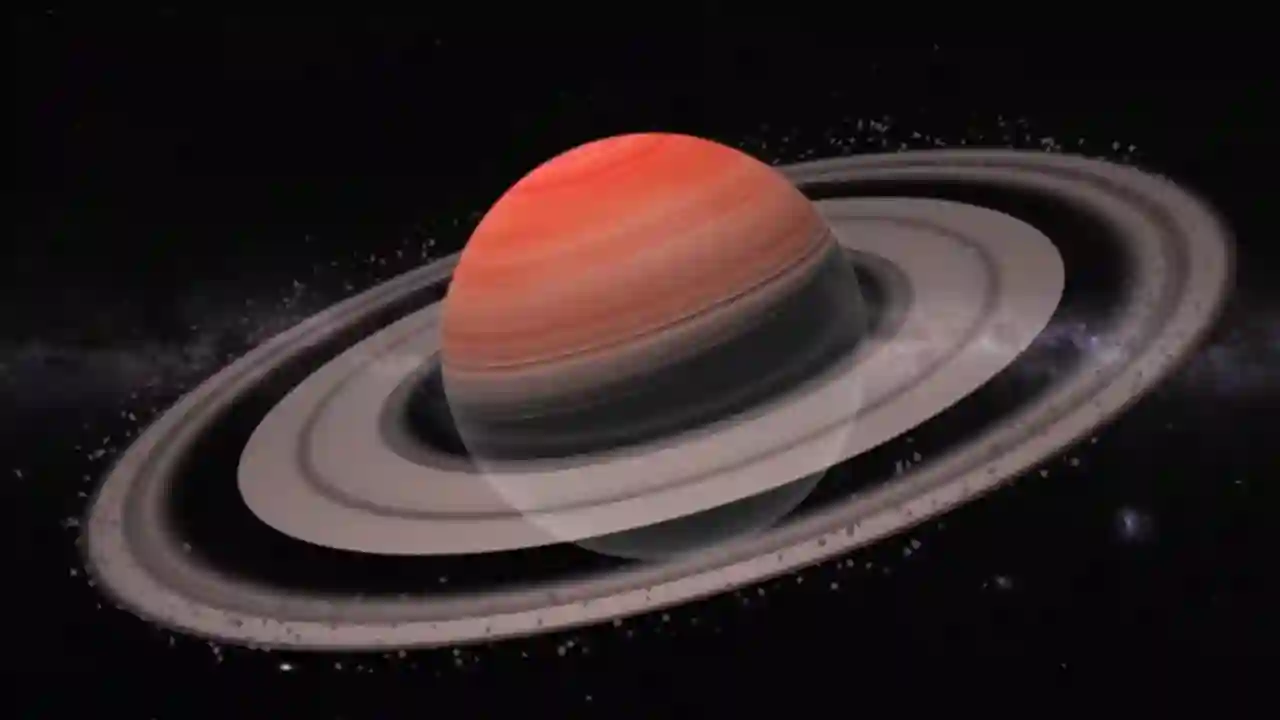
What Is a Gas Giant Like Saturn?
A gas giant is a huge planet made mostly of light gases instead of rock. Saturn floats because it is less dense than water—you could, in theory, place it in a giant bathtub and it would bob right up! Gas giants like Saturn, Jupiter, Uranus, and Neptune formed far from the Sun where it was cold enough for gases to stick around.
These planets have no real surface; if you tried to land, you would keep sinking through clouds forever. Strong winds and massive storms rage inside, powered by leftover heat from when the planet formed.
Saturn Rings Explained in Simple Words
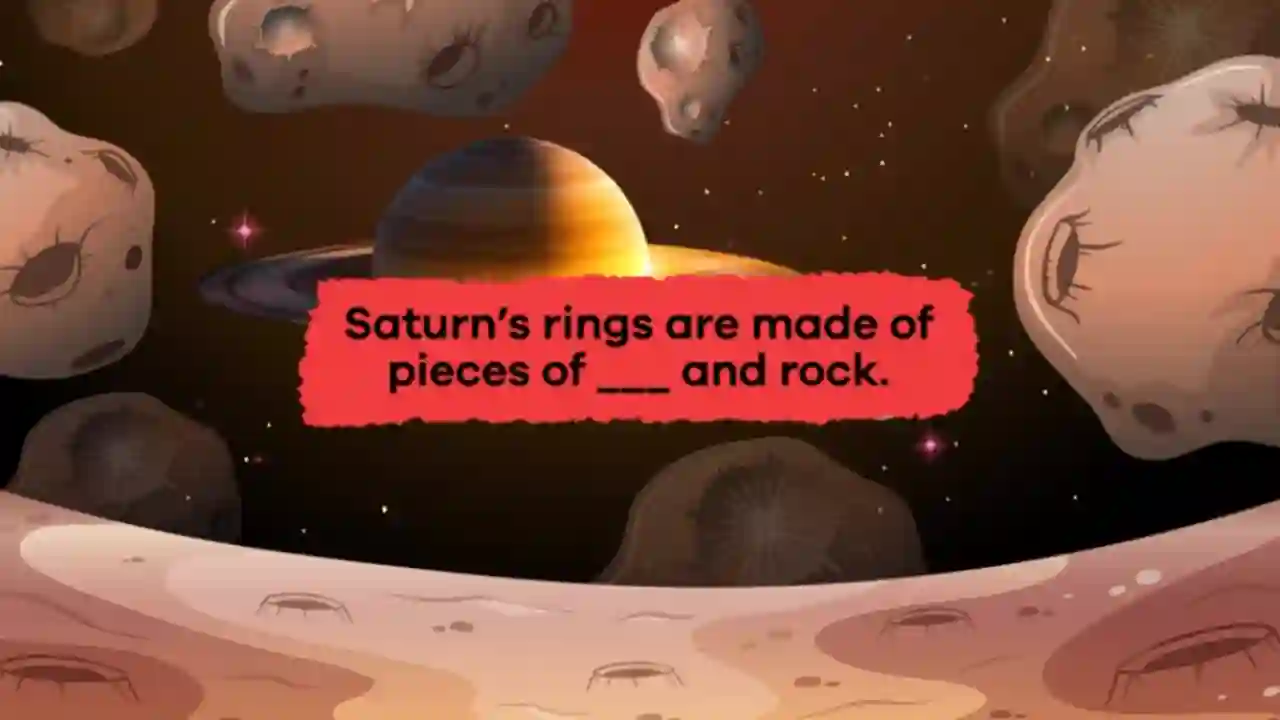
Saturn rings explained are billions of icy chunks ranging from dust grains to house-sized boulders orbiting the planet in thin, flat sheets. They are held together by Saturn’s gravity and shaped by small “shepherd” moons that nudge the ice into lines. Sunlight makes the rings sparkle like diamonds, while gaps and twists give them letters like A, B, and C.
The rings may have formed from smashed moons or leftover pieces from the solar system’s birth. Over millions of years, they slowly fall into Saturn, but for now, they remain the planet’s most famous feature. No other planet has rings this bright and beautiful.
Saturn Moons Overview and How Many There Are
Saturn moons overview shows a huge variety of shapes and sizes. How many moons does Saturn have? As of 2025, Saturn has 274 confirmed moons, more than any other planet. These range from small, irregular rocks to massive worlds like Titan.
Big moons like Mimas, Enceladus, Tethys, Dione, Rhea, and Iapetus orbit close, while distant irregular moons travel in weird paths. These moons interact with Saturn’s rings, shaping and keeping them in line, almost like cosmic shepherds.
Titan Moon Facts That Amaze Kids
Titan is Saturn’s biggest moon and even larger than Mercury! Its thick orange atmosphere of nitrogen and methane hides lakes of liquid methane and ethane on the surface. Rain falls as hydrocarbons, carving rivers and dunes in a super-cold world at -179°C.
NASA’s Cassini spacecraft and Huygens lander discovered mountains, craters, and possible underground oceans of water, sparking dreams about alien life. Titan’s sky always looks hazy like a permanent sunset, and winds carve dunes longer than the Grand Canyon. It is the only moon in the solar system with a dense atmosphere you could almost breathe—if it weren’t toxic.
Saturn Storms and Wild Weather
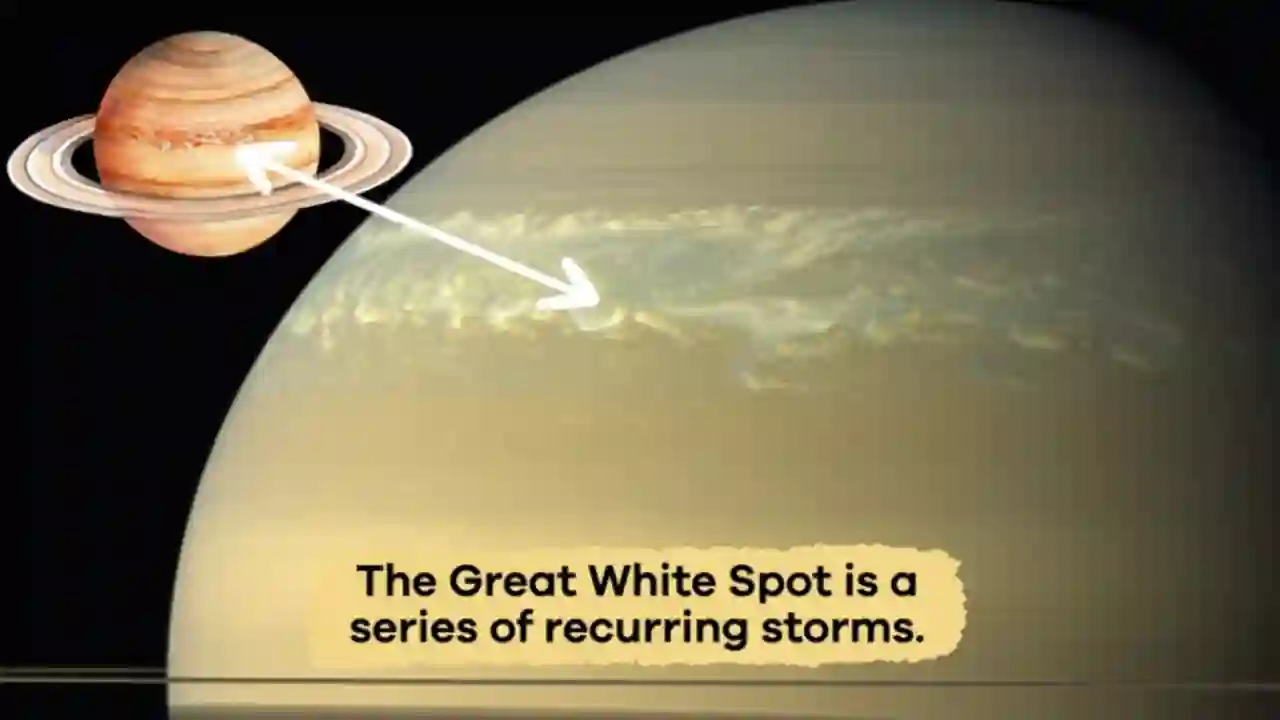
Saturn storms are enormous and fascinating. At the north pole, a hexagon-shaped jet stream 30,000 km wide swirls like a giant six-sided storm. Lightning towers taller than Earth flash inside ammonia storms, and white spots appear every few decades, traveling around the planet like hurricanes.
A fast 10.5-hour day makes Saturn spin quickly, stretching clouds into bands of yellow and tan. The planet’s weather shows how gas giants brew storms on a massive scale using leftover heat from their formation.
What Saturn Sky Looks Like from Its Moons
From a moon like Titan, Saturn’s sky is incredible. Rings arch overhead like a rainbow bridge, and the planet fills half the view with swirling clouds. Sunsets glow orange through the thick atmosphere, and auroras dance at the poles. On Enceladus, geysers spray icy plumes lit by Saturn’s glow, creating sparkling spectacles.
Kids can imagine floating there, watching shadows from the rings sweep across icy plains under a starry dome.
Credit: Video and images sourced from the YouTube video referenced above. All rights belong to the original creator. Learn Bright
Saturn Planet Facts to Wow Your Friends
Saturn planet facts are full of fun surprises:
- Saturn is the least dense planet in the solar system.
- You could fit 83 Earths side by side across its diameter.
- Faint rings beyond the main ones exist, waiting to be discovered.
- Voyager and Cassini missions mapped storms, moons, and ring gaps.
- Seasons last over seven Earth years each due to Saturn’s tilt.
- Kids can track Saturn with apps or telescopes to see the rings and moons move in real time.
Exploring Saturn’s Wonders Today
Telescopes show Saturn’s rings and moons clearly from Earth, making it perfect for young stargazers. Future missions may land on Titan or study Enceladus’ icy plumes to search for signs of life, building on Cassini’s discoveries. Saturn moons and rings offer endless adventure and science fun for kids curious about the solar system.
Conclusion – Saturn Facts
Saturn facts for kids show a giant world of rings, storms, and moons full of mysteries. From 274 orbiting moons to the icy lakes of Titan and hexagonal storms, Saturn blends beauty and science. Learning Saturn facts sparks curiosity, making kids excited about space exploration and the wonders of our solar system.
10 FAQs on Saturn Moons and Facts
How many moons does Saturn have?
Saturn has 274 confirmed moons, more than any other planet.
What are Saturn’s rings made of?
Icy particles from dust to boulders, orbiting in thin, flat sheets.
What makes Titan special?
Titan has lakes of methane, rivers, and a thick atmosphere bigger than Mercury.
What color is Saturn?
Pale yellow or gold from ammonia clouds.
What is a gas giant?
A huge planet of hydrogen and helium gases with no solid surface.
What is Saturn sky like from a moon?
Rings overhead, Saturn dominating the view with glowing auroras.
Why are Saturn’s rings famous?
They are bright, wide, and made of icy chunks orbiting in flat sheets.
What storms happen on Saturn?
Hexagon clouds, lightning, and giant white spots circling the planet.
Inside Saturn planet, what happens?
Gases turn to liquid and metal under huge pressure around a rocky core.
Saturn planet meaning?
Named for the Roman god of time and harvest, symbolizing slow cycles.
Suggested Posts
Uranus Facts for Kids | Ice Giant, Rings, Moons & Weird Tilts
Neptune Facts for Kids: Explore the Farthest Planet and Its Moons
Earth Planet Facts for Kids | Explore Our Blue and Green Home